You, Me and the Dog SVG
A Warm, Uncomplicated Vibe — Right Out of the Zip File
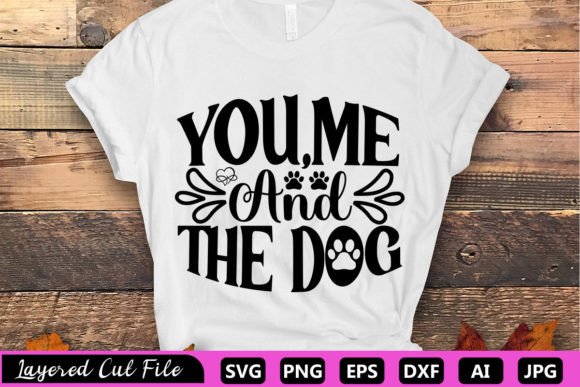
Opening the You, me and the Dog SVG archive feels like unrolling a sketch from a quiet afternoon—simple lines, gentle curves, and a soft, inclusive rhythm. It’s not flashy or ornate; it’s emotionally direct. The composition centers on two stylized figures holding hands, with a small dog nestled between them. No facial details, no exaggerated features—just clean silhouettes and balanced negative space. That minimalism is its strength: it reads clearly at 3 inches wide on a baby onesie and still holds charm at 6 inches across a tote bag. As an embroidery designer, I immediately see this as a handmade product anchor—not a standalone statement, but a quiet connector. It belongs to moments: first walks with a new puppy, matching family sweatshirts, or a nursery wall hanging that says “we’re in this together” without saying much at all.
Where It Shines in Real Embroidery Projects
I tested You, me and the Dog SVG on three real-world items: a medium-weight cotton tote bag, a French terry sweatshirt, and a linen tea towel. On the tote, it stitched cleanly with a satin stitch outline and light fill stitch for the figures—no puckering, no thread breaks. The design’s open structure meant stabilizer didn’t fight the fabric, and the lack of tight corners kept my machine humming smoothly. On the sweatshirt, I used tear-away + cut-away combo stabilizer, and the result felt substantial but not stiff—a win for custom apparel where comfort matters. The tea towel was the most revealing test: because linen shifts easily, I hooped it with spray adhesive and reduced stitch density slightly. Even then, the clean lines held. This design doesn’t demand perfection—it accommodates human workflow. That makes it ideal for Etsy sellers juggling multiple orders, small shop products needing consistent quality, or holiday embroidery batches where speed and clarity matter more than complexity.
Where to Pause—and Why
It’s not magic. The You, me and the Dog SVG has natural limits, and recognizing them upfront saves time and customer trust. First: avoid it on highly textured fabrics like bouclé or thick terry cloth unless you’re willing to digitize a simplified version yourself. The current line weight won’t bridge deep pile gaps. Second: skip it for curved surfaces like baseball caps unless you reduce size significantly (under 3 inches) and adjust underlay—those smooth arcs don’t adapt well to dome-shaped hoops without tweaking. Third: tiny lettering isn’t present here, but the small dog’s ears and joined hands sit close to the threshold of legibility at sub-2-inch sizes. If you’re making baby embroidery for preemie hats or delicate burp cloths, test those details on scrap first. And on dark fabric? The design relies on shape over contrast—so choose thread colors deliberately. A charcoal gray thread on navy might disappear; cream or mustard pops with warmth and intention.
What It Adds to Your Finished Product—Beyond Stitching
This isn’t just about whether the design sews out. It’s about what it *does* for your brand and buyer. You, me and the Dog SVG elevates perceived value by feeling intentional—not generic, not clip-art. Customers recognize sincerity in simplicity. When someone buys a personalized gift with this design, they’re not buying a dog motif—they’re buying resonance. That builds customer trust, especially for personalized gifts tied to life transitions: new pets, blended families, therapy dog partnerships. For craft business owners, it supports cohesive branding—pair it with neutral-toned packaging, soft photography, and handwritten notes, and you’ve got a boutique-ready story. It also scales well digitally: use the included PNG for clean printable mockups, the AI file if you’re adjusting spacing for a patch layout, or the DXF if you’re laser-cutting coordinating wood shapes. As design assets, these files support flexibility—not just one product, but a whole collection.
Practical Designer Notes Before You Stitch
- Always test on scrap fabric first—especially with stretchy knits or blends. Even simple designs behave differently when tension or feed dogs shift.
- Review stitch density before loading into your machine. If the original file wasn’t digitized for embroidery (and based on the format list, it likely wasn’t), you’ll need to convert or adjust it using your embroidery software.
- Confirm hoop size compatibility. The SVG itself doesn’t define dimensions—check your digitized version’s bounding box against your most-used hoops (e.g., 4×4, 5×7).
- Inspect small details at 200% zoom: are the dog’s paws connected? Do the hands overlap cleanly? Tiny gaps become holes in stitching.
- Test in black and white mockups—not just color. Contrast reveals clarity issues invisible on screen.
- Use proper stabilizer for your fabric type. Lightweight cut-away for knits, tear-away for stable wovens, and fusible for sheer layers.
- Verify licensing before selling finished items or reselling the digital file. The description mentions sublimation and decals—but commercial embroidery rights aren’t stated. When in doubt, contact the seller.
Final Thought: A Design That Serves the Moment
You, me and the Dog SVG doesn’t shout. It leans in. That’s rare—and valuable—in a market flooded with busy, over-digitized graphics. It works because it respects the craft: it leaves room for your skill, your fabric choice, your thread palette, and your customer’s story. Whether you’re stitching a single embroidered patch for a local rescue fundraiser or building a full small shop product line around connection and calm, this design holds space for meaning without demanding attention. In the end, the best machine embroidery design isn’t the one with the most stitches—it’s the one that feels like it was made for the hand holding the hoop, and the heart wearing the finished piece.